Global Environmental Culture Program
SceNE Project
High-resolution Reconstruction of Resilient Indigenous Lifestyle in Environmental Changes to Future Collective Knowledge Deduced from the Fusion of Science and Arts
Abstract
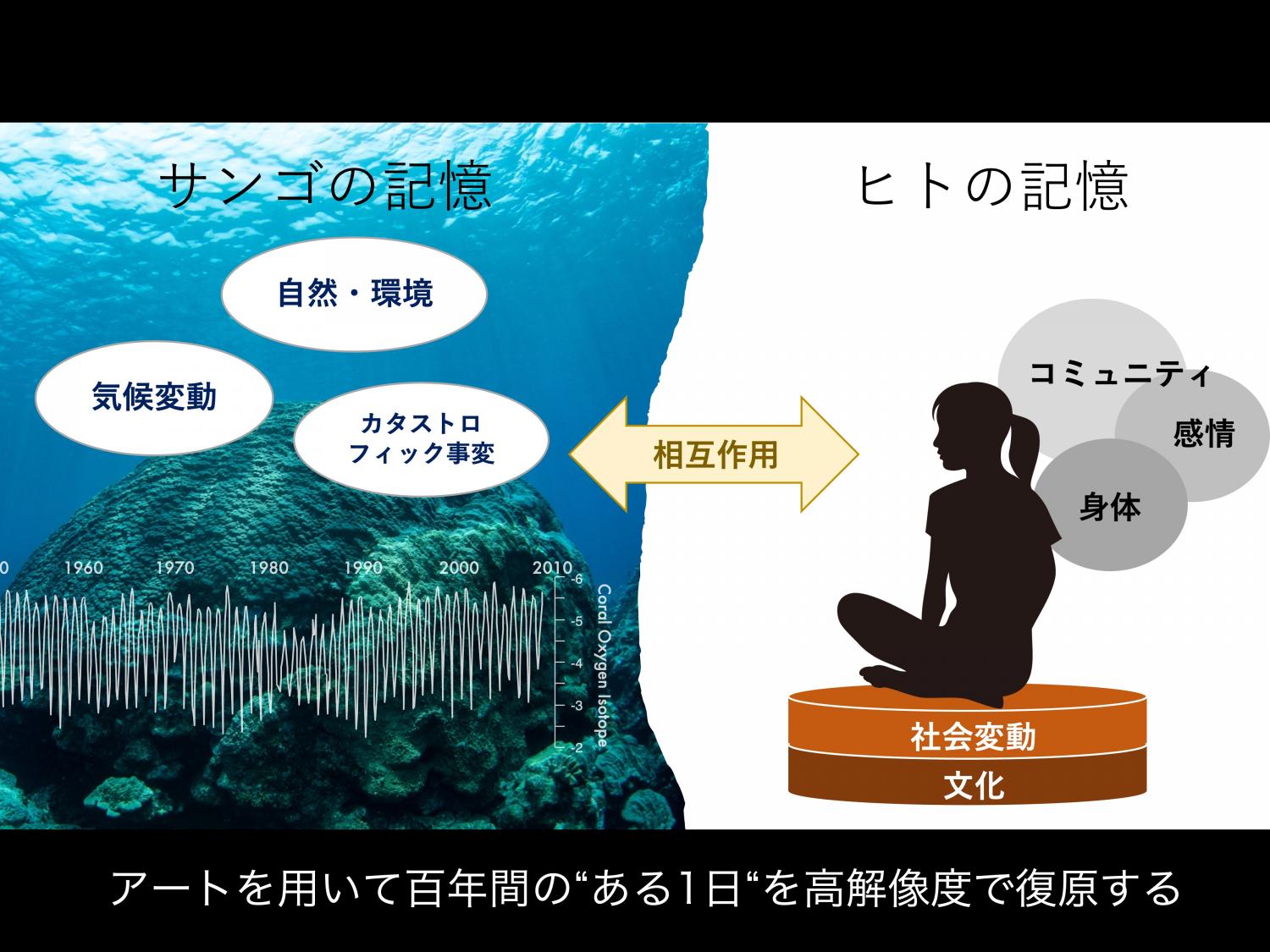
How can we make global environmental issues our own? By using high-resolution environmental reconstruction using coral annual bands, this project will discover local indigenous knowledge born from the relationship between humans and nature, and local issues buried in global-scale changes. Using art as a medium, we will discuss how local communities can work toward spontaneous solutions to global environmental problems, and create future collective knowledge to obtain an image of local communities that can easily be empathized with.
Climate change has profoundly affected terrestrial and marine ecosystems, human migration, settlements, lifestyles, and civilizations. Recent economic development, population growth, and globalization risk societal vulnerability, perhaps leading to simpler lifestyles. This project aims to re-evaluate indigenous knowledge from nature and human memories and create a future collective knowledge that is resilient and sympathetic to future global environmental changes.

Results
What we know so far
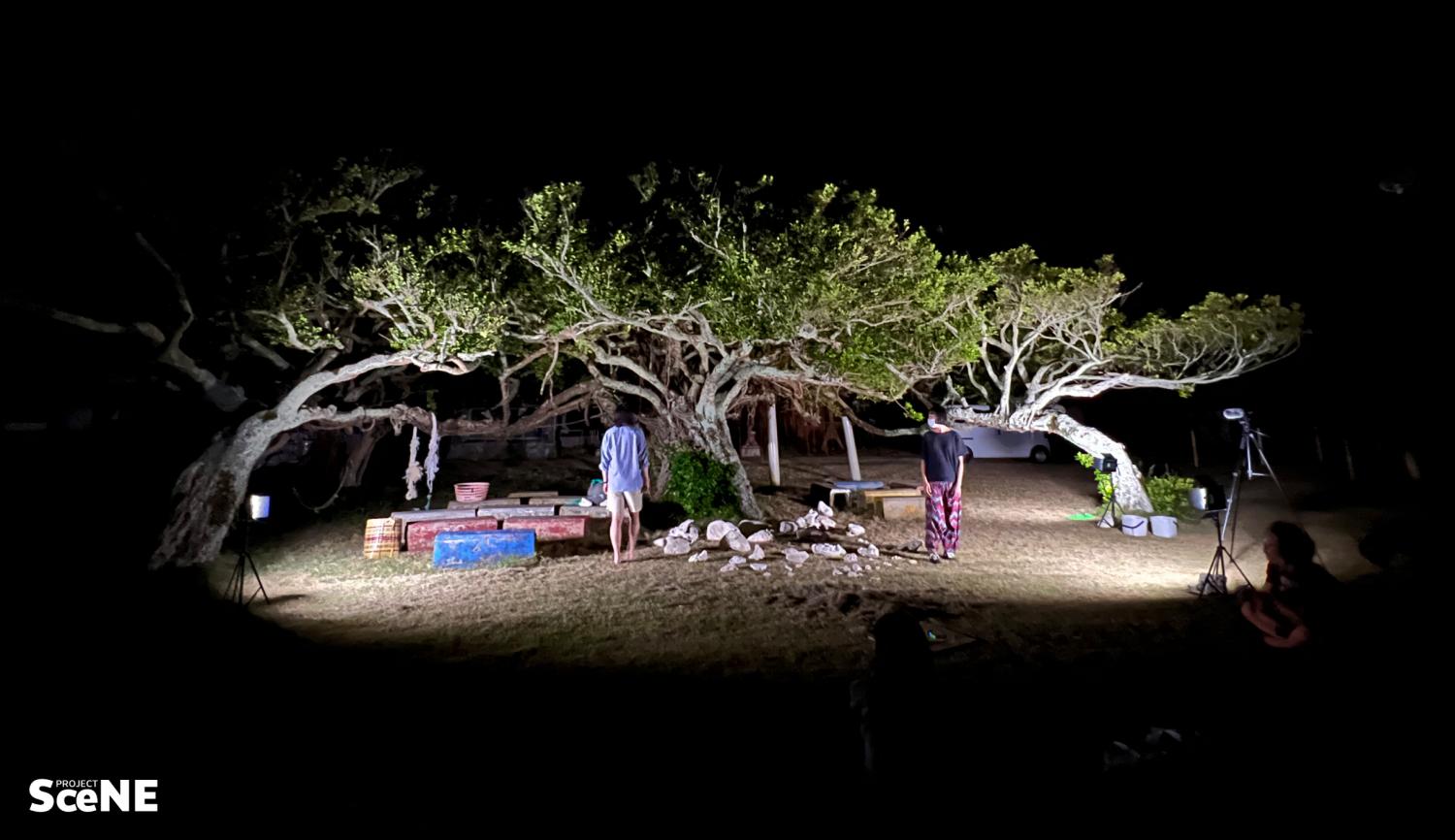
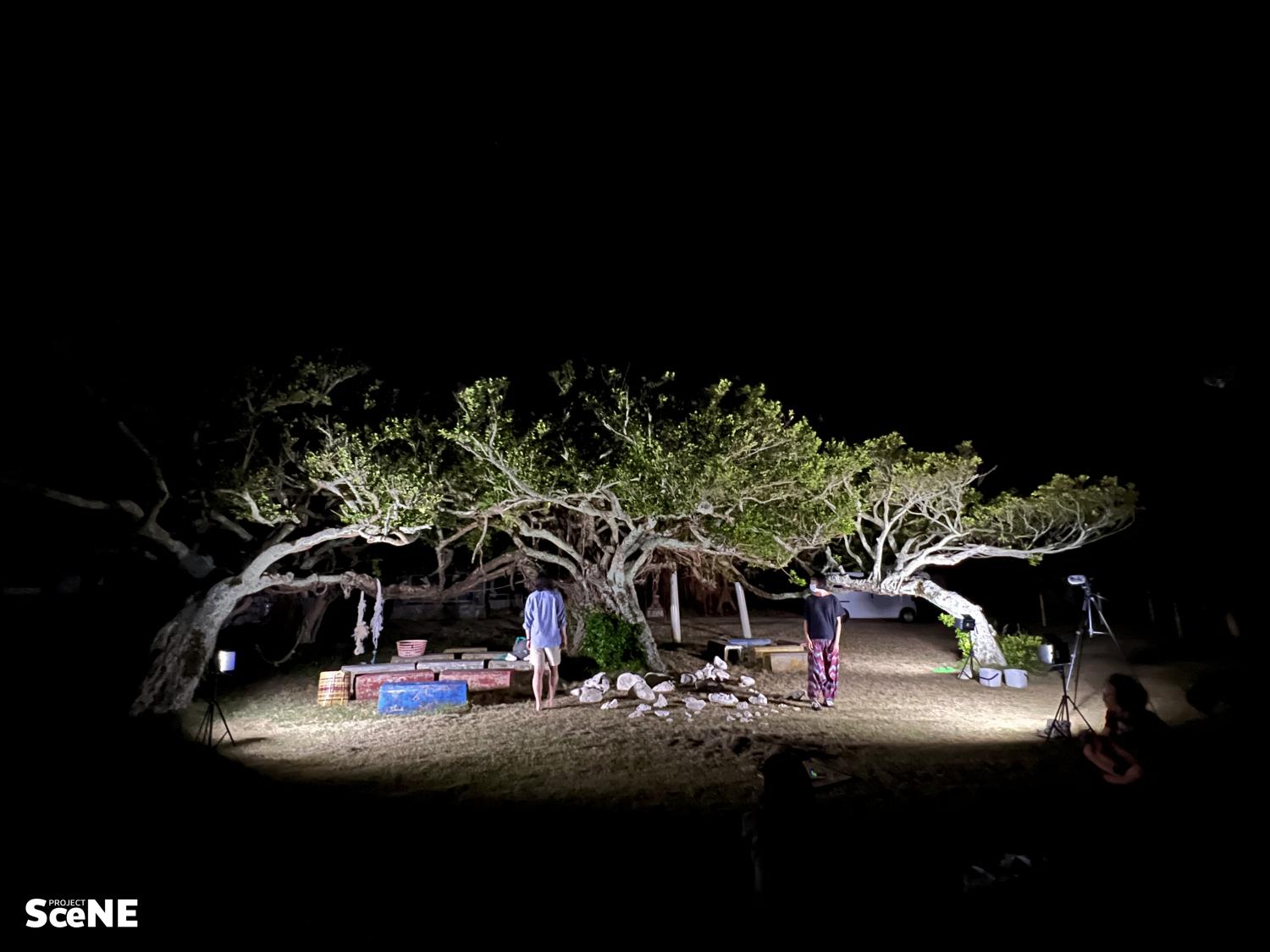
In this research, we incorporate artistic methods, including theater, to develop and implement methods aimed at promoting empathy acquisition and collaborative future-thinking among interdisciplinary researchers, local stakeholders, and different generations. In previous studies, we have set virtual SceNEs (Scenes of the Era) in the model region of Kikaijima, where pivotal points of environmental and social change in the past were depicted on theater stages. This allowed for the sharing of high-resolution images of the relationship between people and the environment under different historical periods and environmental conditions. Furthermore, to integrate science and art, researchers and artists are engaging in discussions on how to express scientific concepts through art in a collaborative and equitable manner.
Noteworthy items
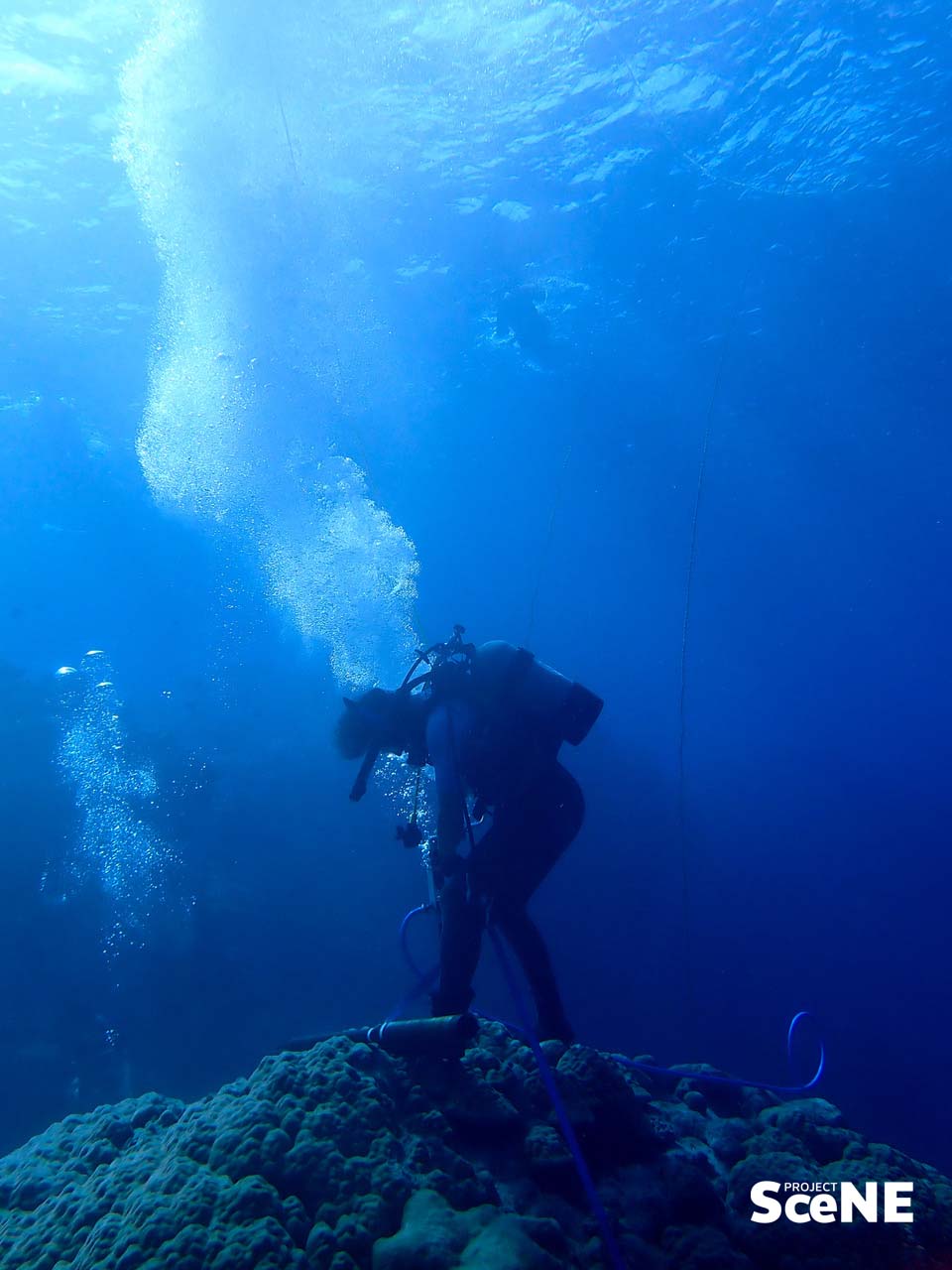
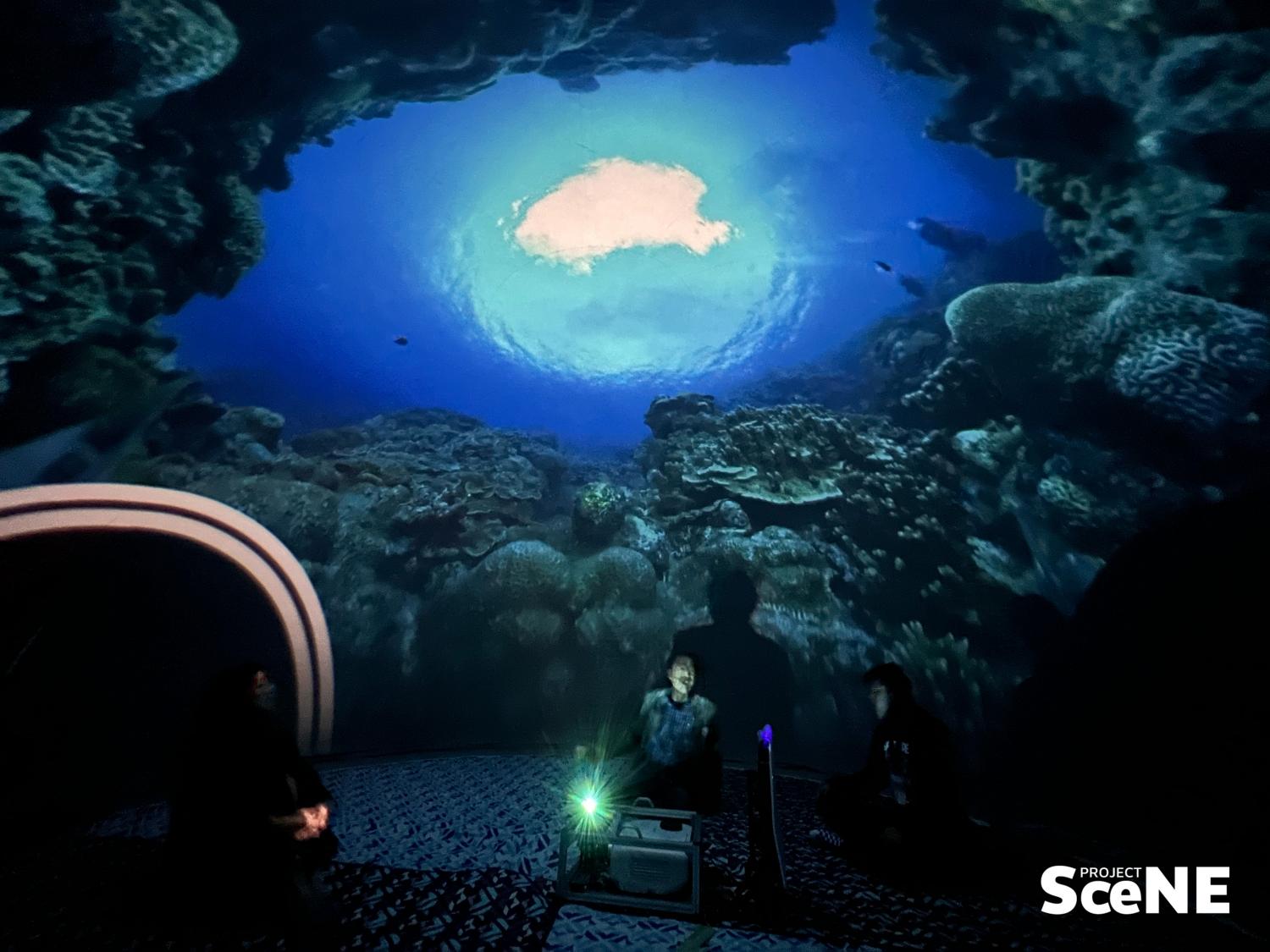
This year, we promoted research that explores the relationships among nature, culture, and society based on coral reef systems. We established an analytical framework for stable isotope ratio mass spectrometry and conducted drilling surveys of Holocene fossil corals from Kikaijima, followed by measurements of oxygen and carbon isotope ratios. We also carried out the sailing voyage “The Ark of Coral Reefs,” through which marine observations, underwater acoustic surveys, and cultural exchanges fostered collaboration among researchers, artists, and residents. In addition, research outcomes were shared through various platforms, including a collaborative exhibition with traditional crafts in Kyoto, a theatrical performance at the Toyooka Theater Festival, SceNERIUM dome screenings, and community meetings and festivals, enabling a multifaceted understanding of the relationships between coral reefs and human society.
Member
Project Leader
WATANABE Tsuyoshi
Associate Professor, RIHN / Faculty of Science, Hokkaido University
Sub Leader
YAMAZAKI Atsuko (Nagoya University)
Main Members
GOTO Akira (KIKAI Institute for Coral Reef Sciences)
KATO Hirofumi (Hokkaido University)
HIRATA Oriza (Professional College of Arts and Tourism)
YAMANO Hiroya (The University of Tokyo)
NAKAMURA Takashi (Science Tokyo)
TANAKA Kentaro (Tokyo City University)
NISHIMURA Yuya (Osaka University)
ITO Takeshi (Osaka University)
YODA Mami (Sagami Women’s University)
KATO Katsumi (KIKAI Institute for Coral Reef Sciences)
FUJIEDA Mamoru (KIKAI Institute for Coral Reef Sciences)
HASEGAWA Yuko (Kyoto University)
YAMASHITA Megumi (Artist)
MIYAZAKI Rena (Artist)
SHIGESADA Nako (RIHN)
TANAKA Moena (RIHN)
MIYAJI Kohei (RIHN)
Evaluation by an external evaluation committee
Research schedule
| 2020 | 2021 | 2022 | 2023 | 2024 | 2025 | 2026 | 2027 | 2028 |
|---|---|---|---|---|---|---|---|---|
| IS | FS | FS | FS/PR | FR1 | FR2 | FR3 | FR4 | FR5 |