Co-creation of the Earth-human System Program
LINKAGE Project
Adaptive Governance of Multiple Resources based on Land-Sea Linkages of the Water Cycle: Application to Coral Reef Island Systems
Abstract
Focusing on coral reef island systems located in the Ryukyu Arc as well as in the tropical and subtropical western Pacific, we are elucidating the connections between land and sea through the water cycle, the biocultural diversity and community capability, and the evolution and structure of organizations and institutions that govern the use and management of multiple resources. By integrating and visualizing the above interconnected components, we aim to shed light on adaptive governance of multiple resources based on the water cycle.
LINKAGE Project website (Japanese only)
People living in tropical and subtropical islands where coral reefs develop utilize the blessings of limited water resources such as groundwater and spring water, as well as marine and forest resources.
Water circulates between the land and the sea while changing its shape, connecting the coral reef ecosystem and the land, and nurturing the biodiversity and culture unique to the region.
However, recent land use and socioeconomic changes have led to the depletion of water resources and deterioration of water quality, as well as changes in precipitation patterns due to climate change, rising seawater temperature and sea levels due to global warming, and ocean acidification. Due to changes in the marine environment, the deterioration of coral reef ecosystems is progressing, making it difficult for people to use natural resources such as water resources, fisheries resources, and forest resources, that is, multiple resources.
Therefore, we are conducting research to strengthen “adaptive governance,” in which social mechanisms and institutions for environmental conservation and natural resource management are adjusted to the situation together with local people, so that people living on coral reef islands can continue to use multiple resources.
To this end, this project first aims to elucidate the realities of water circulation and multiple resources through various means of analyzing groundwater and coral reef ecosystems. We seek to understand and predict the responses of multiple resources to changes in socio-economic factors and climate change. Additionally, utilizing a historical ecological approach, the project aims to uncover the cultural values, connections, and diversity of nature nurtured within island communities. By doing so, we elucidate the mechanisms for sustaining livelihoods in island communities with limited resources.
On the other hand, through behavioral science and institutional analysis, we clarify the transition and multilayered nature of the system, organization, and awareness of adaptive governance. In addition, we create new value by visualizing and integrating the relationships between scientific knowledge, indigenous knowledge, policy knowledge, and other knowledge necessary for adaptive governance.
Through these results, we hope to shed light on the connections between land and sea through water cycle as well as on the adaptive governance of multiple resources, in order to contribute to the realization of a resilient nature-symbiotic society in coral reef island systems.
Results
What we know so far
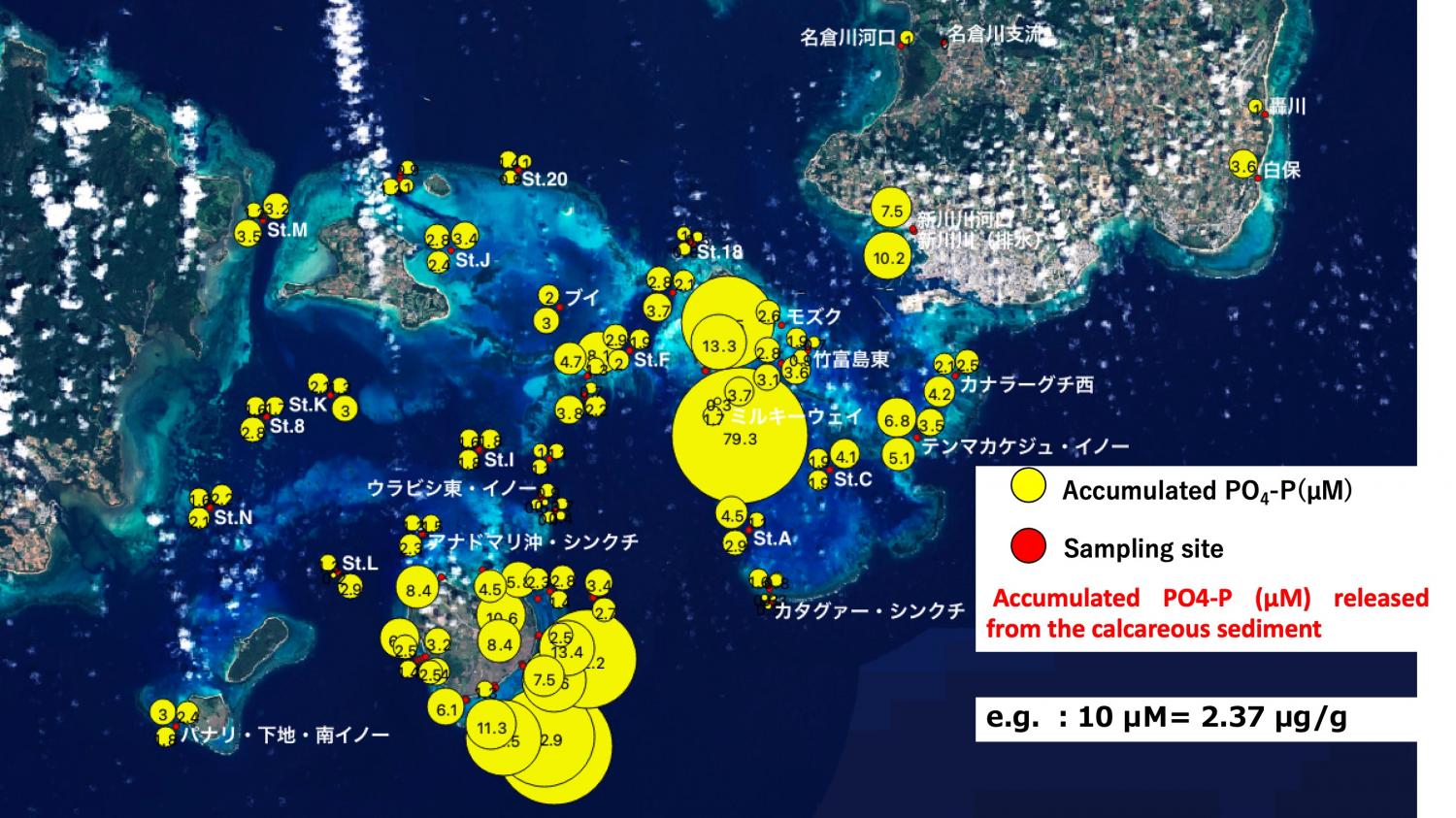
In 2024, a severe bleaching event occurred in Sekisei Lagoon, Japan’s largest coral reef, where 84% of coral colonies were affected. While rising seawater temperature is considered the primary driver of coral bleaching, our research has also focused on phosphorus accumulated in seabed sediments. Our studies have shown that coral bleaching and colony decline tend to occur more frequently in areas with higher phosphorus accumulation in sediments. Furthermore, experiments using juvenile corals indicate that the key factor is not simply phosphate concentration but the nutrient load, defined as the amount of phosphate entering the sea together with water flow. These findings suggest that land-derived impacts on coral reefs should be evaluated in terms of nutrient load rather than concentration alone.
Noteworthy items
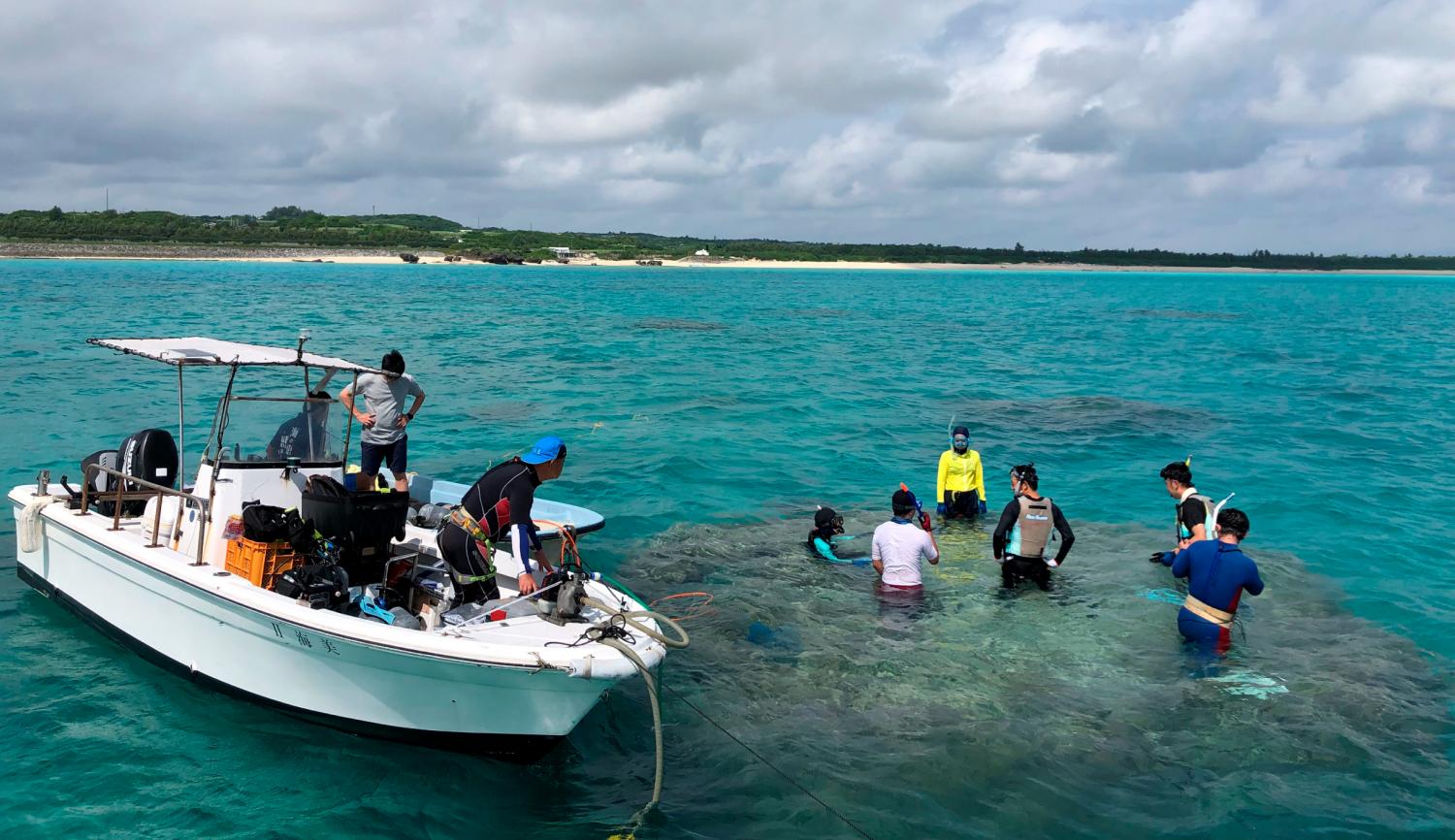
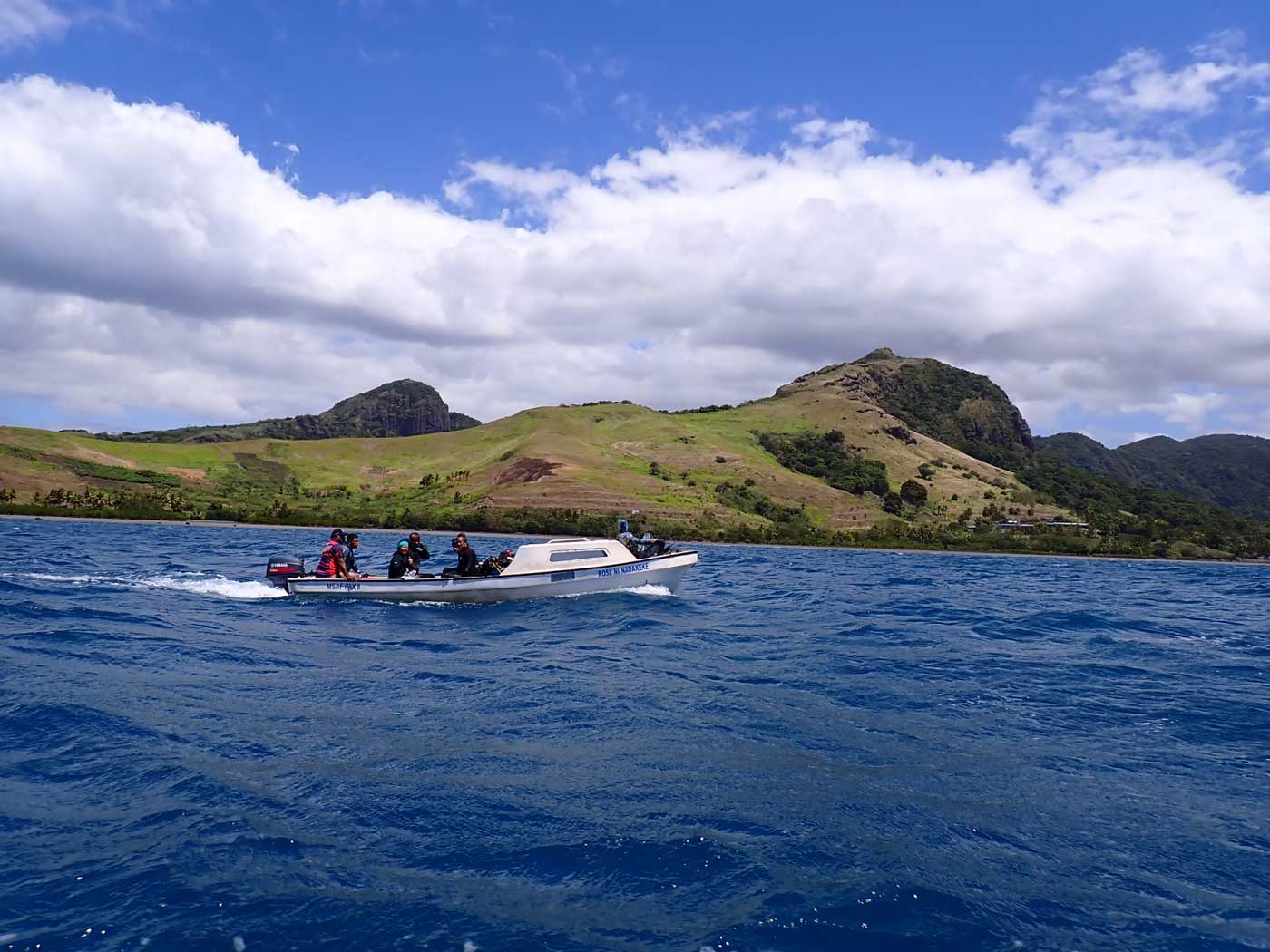
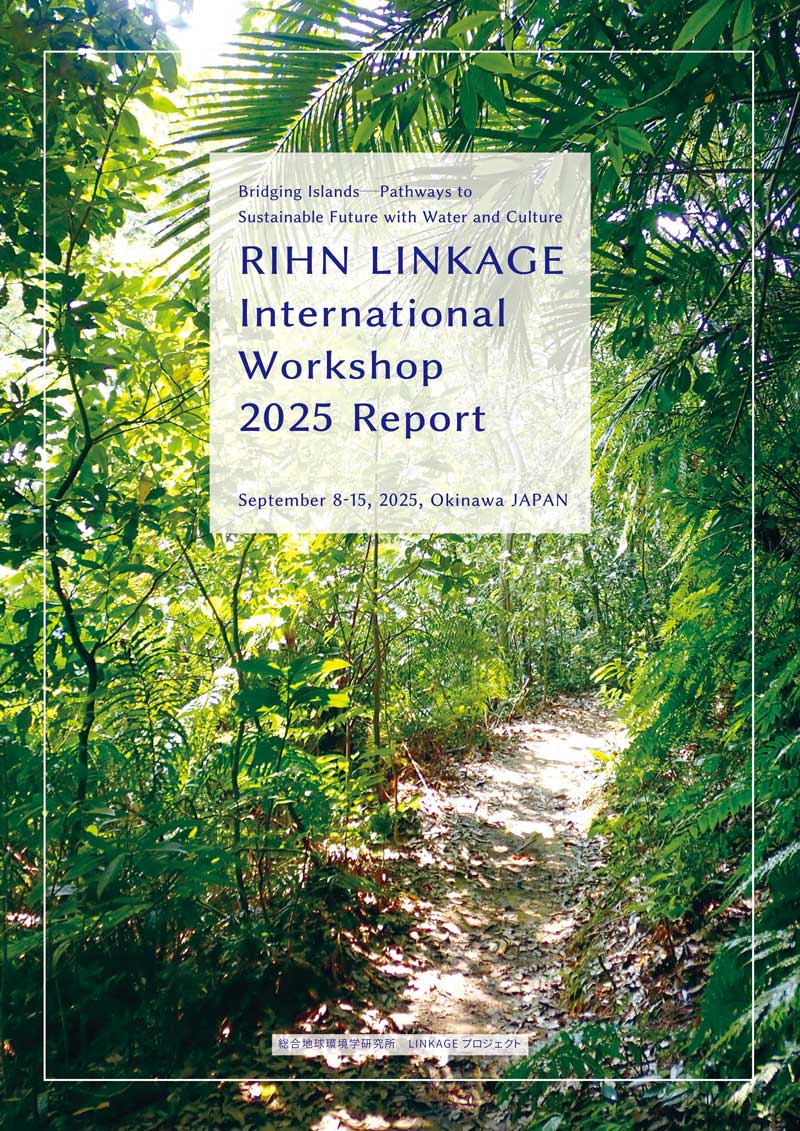
In FY2025, field surveys were conducted on Wangi-Wangi Island, Indonesia, and in Fiji (Photo 1), advancing comparative research on groundwater, seabed sediments, and coral communities. On Wangi-Wangi Island, relationships between phosphorus accumulated in seabed sediments and coral community patterns are beginning to emerge. In addition, the LINKAGE International Workshop was held on Iriomote Island, Okinawa, with researchers from partner institutions and local representatives. The workshop provided an opportunity to share the project’s objectives and challenges, and to co-design methodologies for future field observations and action research (Figure 2).
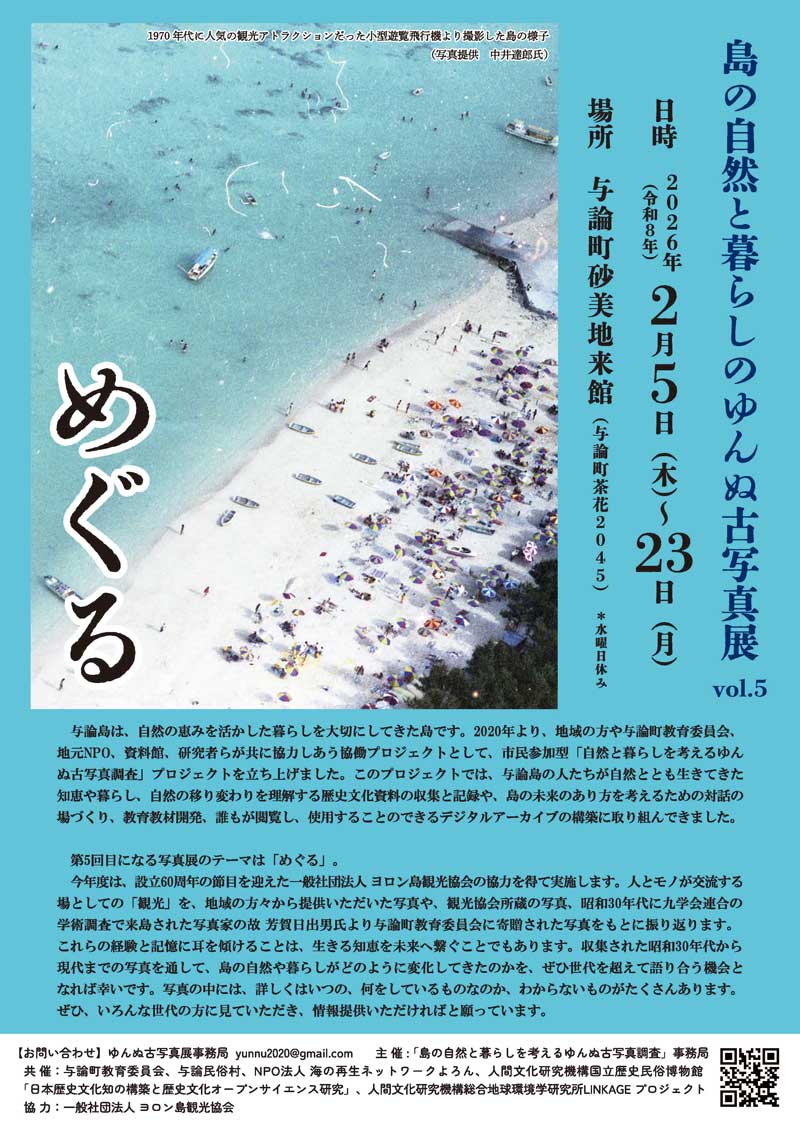
On Yoron Island, we have continued the “Yunnu Historical Photo Project: Exploring Nature and Daily Life,” which aims to document the island’s natural environment and local ways of life. Local residents, the Board of Education, and researchers are working together to collect and archive materials related to changes in the natural environment and everyday life, develop educational materials, and build a digital archive accessible to everyone. The theme of the 5th photo exhibition was “Meguru” (Circling) (Figure 3).
Member
Project Leader
YASUMOTO Jun
Associate Professor, RIHN / Assistant Professor, University of the Ryukyus
Sub Leader
SHINJO Ryuichi (University of the Ryukyus)
Researchers and Research Associates at RIHN
TOMOJIRI Daiki (Researcher)
LEONG, Chris (Researcher)
KATAOKA Takae (Research Associate)
Main Members
KUBO Yoshiaki (Kwansei Gakuin University)
TAKAHASHI Soyo (University of the Ryukyus)
RAZAFINDRABE, Bam H.N. (University of the Ryukyus)
*All project members are listed at the link below.
https://mizunowa.skr.u-ryukyu.ac.jp/investigation.html
Evaluation by an external evaluation committee
Research schedule
| 2020 | 2021 | 2022 | 2023 | 2024 | 2025 | 2026 |
|---|---|---|---|---|---|---|
| FS1 | FS/PR | FR1 | FR2 | FR3 | FR4 | FR5 |