SRIREP Project
Co-creation of Sustainable Regional Innovation for Reducing Risk of High-impact Environmental Pollution
Abstract
The problem of environmental pollution is not being addressed in developing countries because economic development takes precedence over environmental conservation. To tackle this issue, we conducted research on mercury pollution caused by Artisanal and Small-Scale Gold Mining (ASGM) in the ASEAN region, aiming to address poverty and environmental issues simultaneously in developing countries and to outline a path toward building a sustainable society.
Overview of Research Results
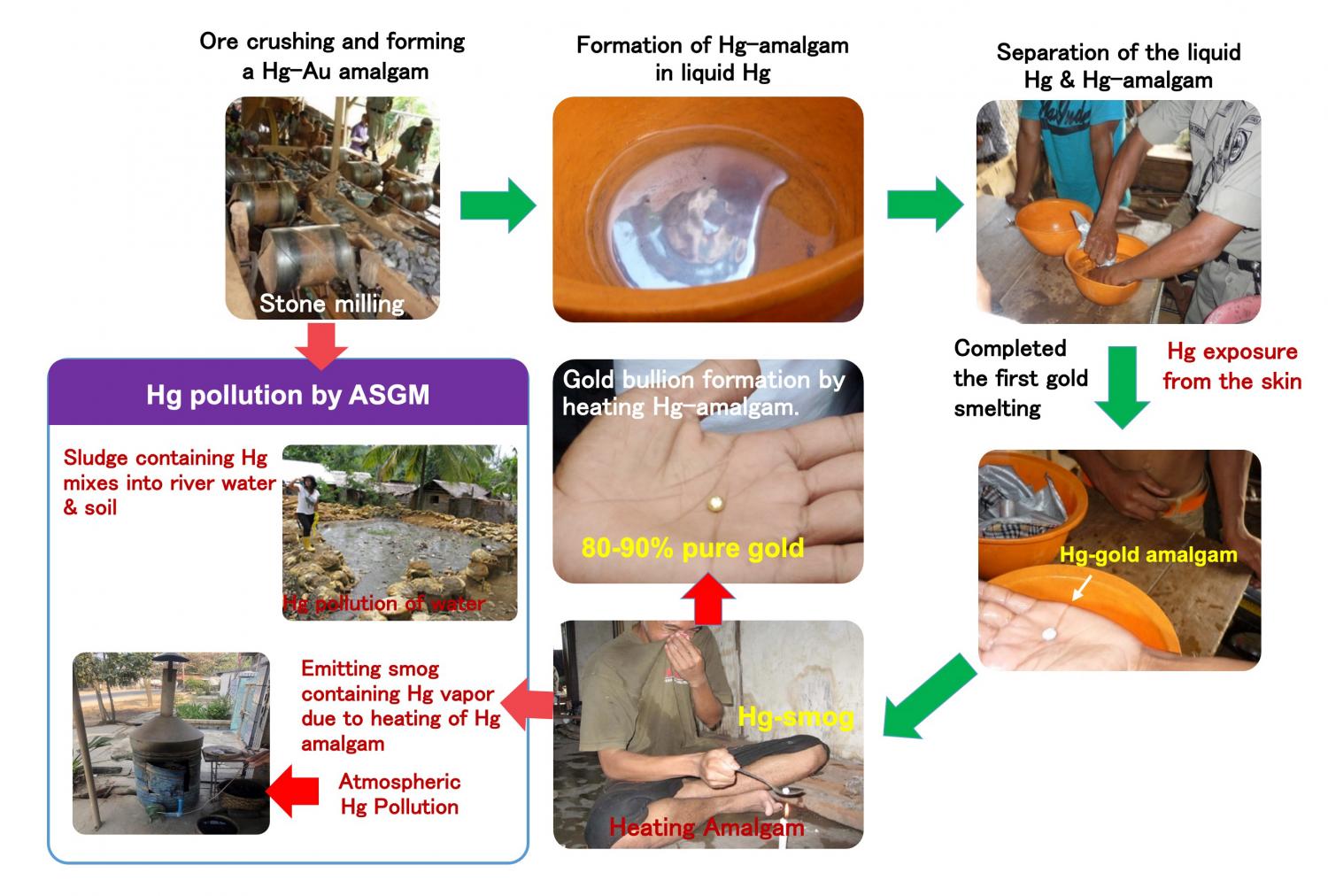
In ASGM, workers mix mercury with manually extracted gold ore to form mercury amalgam, from which gold is then extracted by evaporating the mercury. This process causes both local and global mercury pollution.
In the project, researchers collaborated with local residents, private sector stakeholders, NGO representatives, local government officials, etc., to address this issue and conducted research at three different levels (Figure 1).
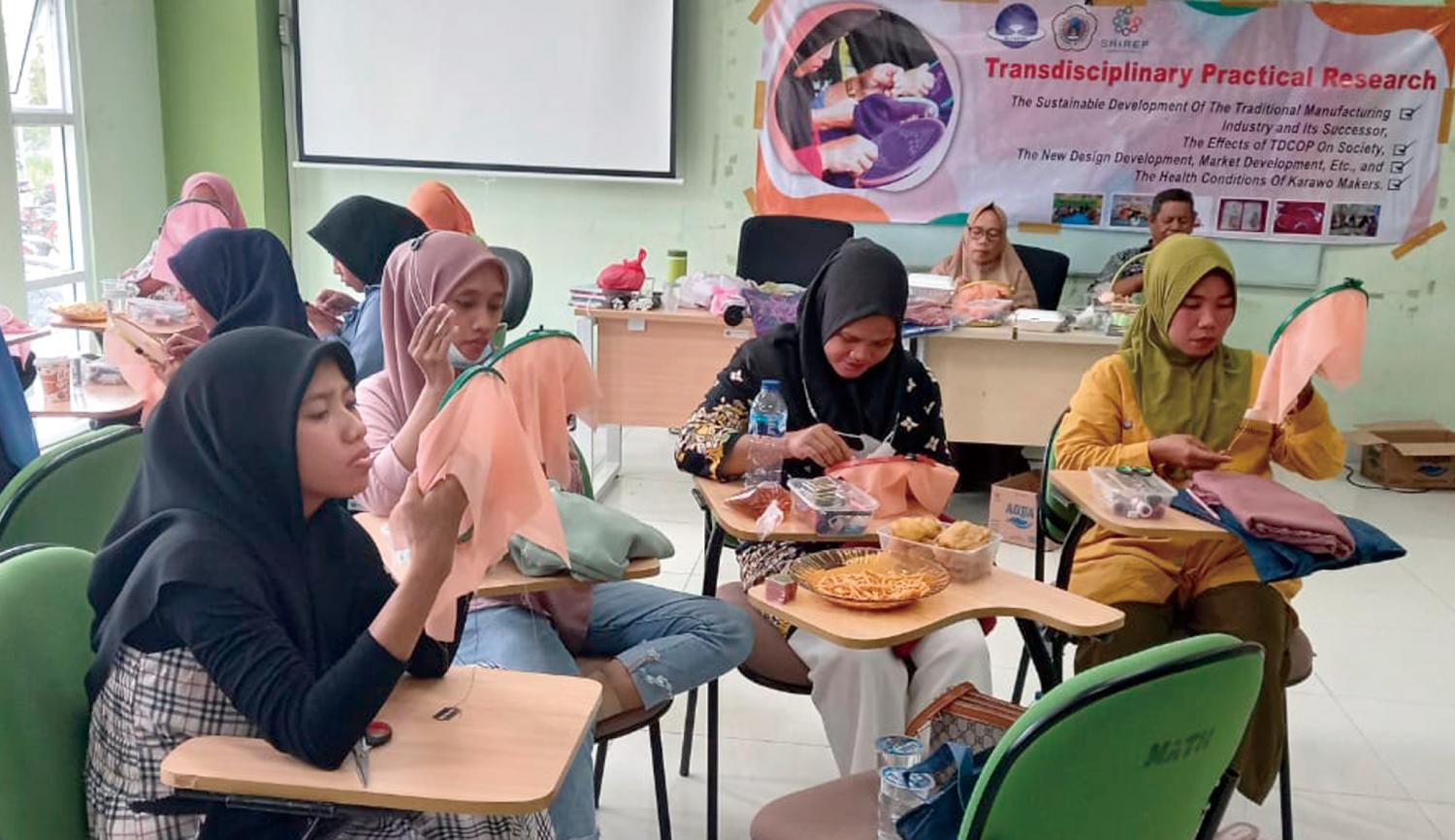
In particular, they used technology and activities that contribute to problemsolving, as well as Transformative Boundary Objects (TBO) that enhance community cohesion, forming Transdisciplinary Communities of Practice (TDCOP) to generate strong interest among local residents and promote community participation. Through this process, they demonstrated a shift in environmental awareness among residents. Furthermore, it was shown that this change can lead to sustainable regional innovation. Despite the COVID-19 pandemic, each TDCOP continued to hold rigorous web meetings 2-3 times per month, and as a result of on-site research conducted by local researchers, the TDCOPs were able to maintain active engagement. Specifically, members of the community and researchers involved in the study of natural fibers and traditional embroidery expanded their collaboration into international multisectoral cooperation between Japan and Indonesia to develop sustainable alternative livelihoods for communities, including mine workers and their families in ASGM regions.
Additionally, a Mercury Zero Society Network was established in ASEAN to raise awareness and address mercury pollution issues. Three medical workshops were held for healthcare practitioners and researchers in Indonesia. Furthermore, comics in Japanese, English and Indonesian languages focusing on mercury environmental pollution were created and distributed to young people in Japan, Indonesia and other countries.
Our concept of global environmental studies
I believe it is a discipline of learning and creating together with researchers and local residents, and is a more practical discipline.
New connections
Sustainable connections between among stakeholders in Japan and Indonesia have been established internationally.
Results
Member
プロジェクトリーダー
SAKAKIBARA Masayuki
Evaluation by an external evaluation committee
Research schedule
| 2016 | 2017 | 2018 | 2019 | 2020 | 2021 | 2022 | 2023 |
|---|---|---|---|---|---|---|---|
| FS1 | FS2 | FS/PR | FR1 | FR2 | FR3 | FR4 | FR5 |