Area-capability Project
Coastal Area-capability Enhancement in Southeast Asia
Abstract
Coastal area ecosystem services are indispensable for rural people, but are also easily damaged by human use. Many coastal areas with high biodiversity and biological productivity are located in tropical zones of developing countries, as is the case in Southeast Asia. In such areas, ecosystem services, local livelihood and culture are closely related. Conservation and resource management strategies, however, are oft en derived from those of temperate regions, and usually target particular species or commercial resources with little consideration of how multiple ecologies and livelihood strategies overlap in culturally diverse contexts. In addition, in many cases, resource management and conservation activities are independently conducted by several different actors.
Ecosystem services have different significance for different peoples, depending on their interests and contexts. Although overuse and/or abuse of ecosystem services should be avoided, conservation actions should take careful account of the close relationship of local livelihoods and culture to local ecosystems, especially in rural areas lacking other livelihood opportunities. Addressing solutions to environmental problems in such contexts therefore requires linking people and policies engaged in both conservation and resource utilization.
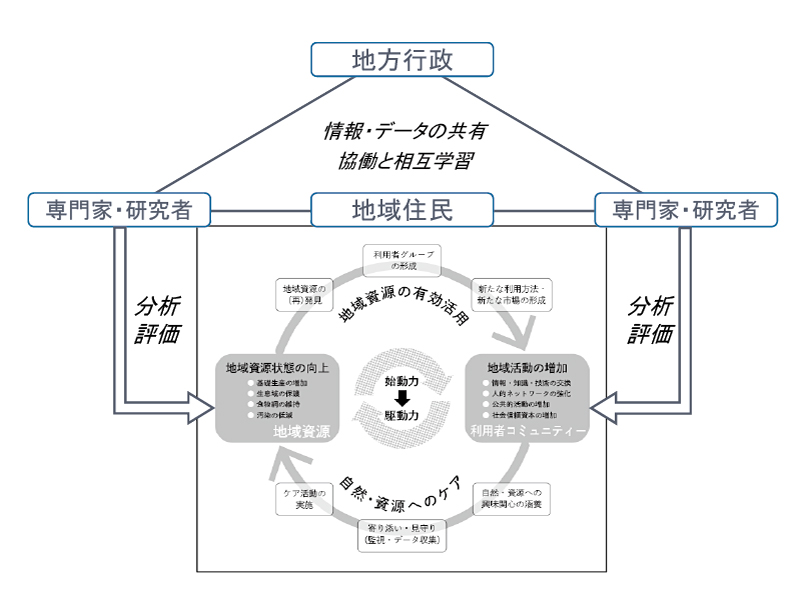
This project attempts to examine several good ecosystem management practices based on local community participation in order to assess the conditions and functions of each actor in creating “an Area-capability cycle”. We expect that an action contributing to Areacapability can link utilization and conservation and facilitate appropriate ecosystem utilizations, improve local life, cultivate ecosystem health, and foster hope for local society.
Member
Project Leader
ISHIKAWA Satoshi